This equipment list is fairly comprehensive and is based on the British and FIS rules for competition equipment. If you don’t have anything below (other than the few optional bits) or are unsure of anything, please get in touch with the Head Coach well in advance of your camp(s) to discuss. For races, many of the items listed below are required by the rules, so not having them may mean your child cannot take part!
For U10/12, 1 pair of all-round race skis is usually plenty, though more experienced racers may prefer a pair of SL and separate GS skis.
U14s and U16s should have race-compliant SL and GS skis. U16s may need SG skis as well. One pair of each is plenty.
Ski boots
Protective equipment
Back protector
FIS-certified hard-ear helmet
Slalom shin guards
*Mandatory for U14/16, preferable for U10/12
^Slalom pole/hand guards (U14/16 only)
^Slalom chin guard (U14/16 only)
^Minis (U10/12) must NOT have pole guards or a chin guard – it is unnecessary and therefore a safety risk! Coaches will remove these on camp so please save them some time and remove them before the camp if you have them.
Ski Clothing
*Catsuit and training shorts (only if you have)
Good-quality, warm winter ski jacket
Salopettes (with full-length side zips if you have a catsuit)
Multiple sets of thermal tops and bottoms (one pair/set is not acceptable for 1 week or more!)
Multiple sets of ski socks (one pair is not acceptable for 1 week or more!)
Gloves (2 pairs for when 1 pair gets wet)
Ski goggles (2 different lenses, one sunny, one foggy/low light)
*Buff/neck warmer
General Clothing
Appropriate casual clothing
Good outdoor footwear
Fitness clothing including sports trainers, shorts/tracksuit, t-shirts, swimming kit (for days off)
Other Items
*Personal tuning equipment (worth considering buying before the camp if you don’t already have, but please seek advice from coaches before doing so)
Sunscreen (min. SPF30, SPF50+ better)
Lip balm with sunscreen
Reusable water bottle (1 litre minimum)
Travel power adapter (not all are compatible so check)
Towel
Please do not bring any devices beyond a phone (e.g. laptop, iPad, portable games console) unless they are necessary for schoolwork, in which case the Head Coach should have been informed
Admin/Paperwork
UK Passport (if you are travelling on a non-UK passport, please inform the Head Coach)
For entry into the EU/Schengen, the passport must have a minimum of 6 months’ validity on the date of entry, and be less than 10 years old. The passport should also be in good condition and not damaged. For further advice, see the FCDO website.
A valid travel insurance policy which covers all camp destinations for the duration of the camp includes cover for ski racing and training, skiing off piste, and skiing on a glacier. Proof (Certificate of Insurance) must be provided to the Head Coach before the camp.
Third-party snowsports liability insurance (included in SSC membership)
Pocket money
Expect your child to spend all the money they have access to!
Pocket money is needed on travel days for meals at airports, and for extras like hot chocolates on the hill, shopping, etc.
A card is preferable to cash, but it needs to be activated and available for use overseas, and able to make payments in a foreign currency (usually EUR/CHF).
One of the best bits of attending ski camps can be the experience of all the travelling. But it can be a challenge to get all of the (expensive!) kit out and back home without breaking the bank, in one piece, and without too much struggle. This guide is based on my (Calum, Head Coach) experience of travelling as a racer/coach/recreational skier and will help make travelling for a camp a breeze!
Firstly, let me be clear about what pieces of luggage I am referring to:
Ski bag: any long bag capable of fitting one or more pairs of skis
Kit bag/boot bag: the (sometimes very!) large rucksack that usually (but not always) has space for ski boots, plus other gear – helmet, back protector, slalom protection, etc.
Suitcase: any large piece of luggage that isn’t either of the above
Backpack: any smaller wearable bags that aren’t specifically for ski kit
Hold bag: any piece of luggage checked in to the aircraft hold on a flight (as opposed to cabin baggage)
The best way to travel
In my opinion, this is the most cost-effective way of getting all the essential kit to a ski camp:
Pack a ski bag in advance, and send it out ahead of the camp in the team van You should be able to fit all the pairs of skis and poles you need into a ski bag, or two if necessary – see below for the best ski bags to buy. You are not restricted on weight (unless I need a crane to load the van!), so you can fill the remaining volume of the bag with other kit, like your catsuit, salopettes & jacket, even ski boots. Getting rid of this bag ahead of time makes travelling through the airport much easier!
Pack your kit bag with remaining kit, and check it in on the flight as a hold bag If you didn’t fit your boots into your ski bag for the van, they can go in this kit bag in the aircraft hold. Then you can fill the rest of the bag with thermals, ski socks, fitness clothing, casual clothing, etc. Using this bag as luggage means you will then have it for carrying kit in resort, as usually we do not put boots on at the hotel, but at or on the first lift.
Take a small backpack as cabin baggage This can be for any important documents, schoolwork, personal items, snacks for travelling, portable chargers that can’t go in the hold, etc.
What if the airline loses my luggage?
We all know this happens, and it can be very disruptive to a camp. The airline is responsible for sorting it out, but it can be days until you and your luggage are reunited. Your ski boots are probably the single most important thing you want to have, because rented boots won’t be anything like your own. Having them in your ski bag in the van practically guarantees that they will arrive with you in resort.
If you pack a set of thermals and ski socks in your cabin bag, or with your skis, boots, and ski clothing, you will have the bare minimum to get going on the first day of training, whether your hold bag has gone missing or not.
Naming kit
It is absolutely essential that every single item your child brings on a ski camp has their name on it! If you pack an item that is not named, you should full expect it not to return! Camps are very intense, moving from one activity to the next, and it’s easy for things to get left behind. On top of that, lots of racers have kit that looks exactly the same (how many Lange kit bags have you seen at a race weekend?). Simply initials in permanent marker is enough, or you can buy pre-printed label stickers, or even a label maker for around £20.
Packing skis
Before packing skis for a camp, they should be fully serviced – razor sharp edges, and universal wax applied. If you are not able to do this at home, you should ask your local ski shop/supplier, or one of your dry slope coaches. The wax should be left on and not scraped off, as this will help protect the skis in transit. There is usually time to take the wax off on arrival in resort, but if there is not, it’s not a big deal. Having said that, there is never usually time to fully service a pair of skis on arrival before the first day on skis, so if you arrive on camp with blunt edges you are effectively wasting the first whole day of training.
Ski ties are absolutely essential not just to protect skis but to make them easy to carry. Two per pair is an absolute minimum, but three is best. With three tightly wrapped, correctly positioned ski ties, and wax left on, your skis are adequately protected & packed for transit.
Avoid wrapping skis with foam or bubble wrap. Whilst a padded ski bag to provide some protection in transit is good (see below), it’s really not necessary to bundle skis up in over-the-top protection. They might pick up a cosmetic bash or two, but they are unlikely to become materially damaged if they are packed properly. Ultimately the airline is responsible if they are significantly damaged or broken in transit.
A note about helmets
Ski helmets are designed to absorb the impact of a single collision. A helmet should be discarded and replaced after any impact (even dropping it!) as the foam padding inside the helmet will have changed and no longer provides the same protection – see salomon.com/en-gb/sg/a/when-should-you-replace-your-ski-helmet.
Clearly, your helmet needs to be looked after in transit. This is why many choose to travel with it in their cabin baggage where they can look after it themselves, though having it in or on the outside of your backpack can bring it over the size restrictions for a cabin bag. Personally, I am happy enough having my helmet in the middle of a well-packed, large bag like a kit bag or suitcase, padded out by soft clothing. You can even fill the inside with things (goggles fit well in the helmet, and the helmet then protects the goggles a bit).
What bags are best?
‘Ski’ bag
The best ski bags for racers are actually roller snowboard bags. Naturally they are wider and can therefore fit multiple pairs of skis & poles, and more kit. These bag are usually slightly padded so protects everything inside well. They are flat-bottomed so pack really well into a van, and the rollers make it easy to load/unload, or wheel around an airport if you have to. Dakine or Wedze (Decathlon) make good ones. Make sure they are long enough to fit your skis – if you squeeze a pair that’s slightly longer than the bag technically fits, they will probably poke a hole through the bag!
I would actually recommend packing skis in a ‘top-and-tail’ form, with tail/tips in opposite directions. That way the bindings ‘mesh’ together and don’t move around as much.
Thin roll-top types are not great as they provide next to no padding/protection, can be very awkward to carry, and often don’t have very big capacity. Also avoid hard-shell ski ‘boxes’
Kit bag
I think the best kit bags are the Lange ones, or Völkl make a similar one. They have internal pockets for boots (so they don’t get wet if it’s raining or snowing walking to the lift), and can still fit a helmet & goggles, back protector, shin/arm guards, water, snacks, and spare clothes.
Kit bags are always full, regardless of their size, in my experience anyway! I personally have been through the process of having a smaller bag that I’ve rammed full of things, thinking I should get a bigger bag so it’s not such a squeeze, and then getting the bigger bag and it’s just as full because I’ve got the room for more junk! So my advice would be to avoid buying the enormous bags (you know, the ones big enough for a U12 to fit inside!), because when full they can weigh more than the racer!
Suitcase
You might not need a suitcase if you have packed well enough into your ski and kit bags, but you might want one if you are doing a longer camp to pack more general clothing. If you do need one, a small soft-shell bag can work well, and you can often manage with the 10-15 kg option offered by airlines which is cheaper than the standard 20-23 kg.
Hard-shell cases are best avoided. They are fixed volume so take up the same space even if they are half-empty, but they also can’t be stuffed full if necessary. They are also very difficult to pack in a van.
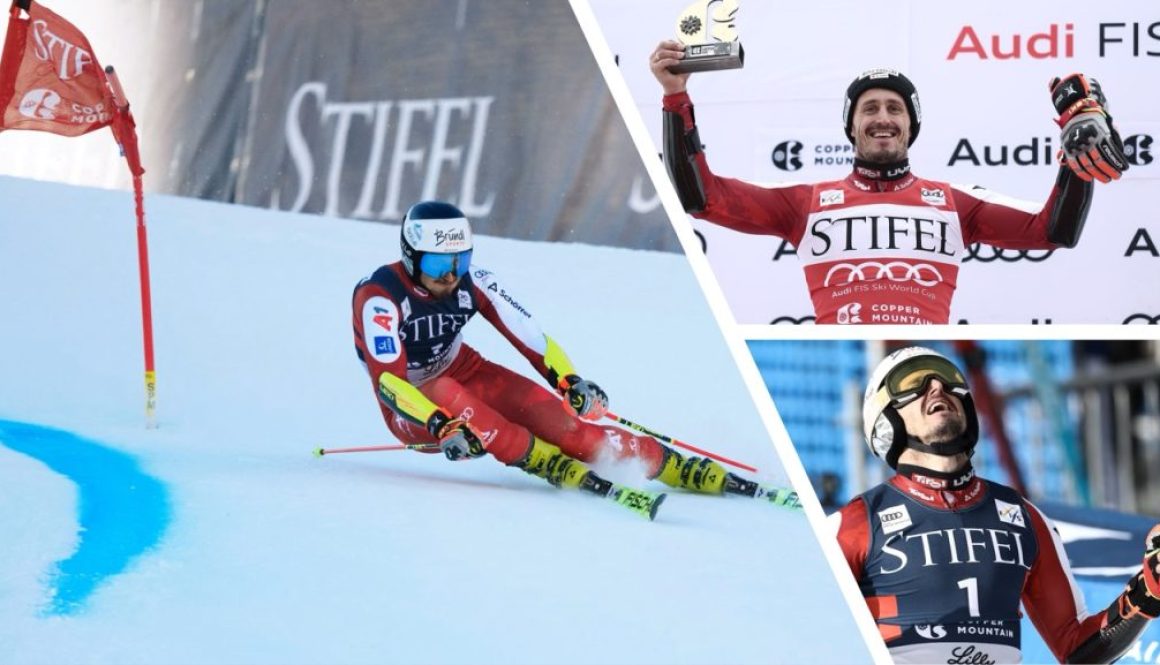
Austrian ski racer Stefan Brennsteiner started his FIS racing career in 2007, posting a few sub-100 FIS point results, mixed in with some c. 150 point results – all-in-all a decent start, but not overwhelmingly good. Fast-forward to 2025, he wins his first World Cup at the Copper Mountain GS, at the ripe (for a sportsperson) age of 34. And we don’t have to look as far as the continent to know that ski racers can be fast well into their thirties – Britain’s Dave Ryding won his first World Cup quite spectacularly in 2022 in Kitzbühel at 35 years old.
What does this mean? Well, it’s more proof that ski racing is a late specialisation sport. Long-Term Athlete Development (LTAD) is a framework developed by Istvan Balyi, a Canadian sports scientist, which is much spoken of in snowsports. This is because peak performance in alpine skiing comes either side of age 30. From this starting point, the use of LTAD then works backwards from there to create a pathway for success, from learning to ski, through grassroots racing (think club races, SSSA, etc.), and all the way up to the Olympics. All British coaches in skiing are educated on the principles of LTAD, alongside many other sports.
Yes, there are definitely examples of the opposite – Mikaela Shiffrin, officially the greatest ski racer of all time, won her first World Cup aged just 17 – but these are the outliers. And unfortunately we see all too often adolescents being pushed hard and placed into intensive, high-pressure environments too early. Although it may produce relatively quick results in terms of performance, the risk of ‘burnout’ is high. There is a huge drop out rate in skiers competing at and around the U16 age group, and whilst there are many factors at play, burnout is surely one of them. A pathway which is carefully and thoughtfully designed around a progressive increase in activity (and the intensity of that activity) can only be a good thing.
You can read more about the specific stages of LTAD on the Snowsport Scotland website, and about avoiding burnout in ski racing in our previous post here. Alpine Canada also has an entire website dedicated to this: ltad.alpinecanada.org.
Active for life
UK Coaching: The Pyramid Model for Sports Development
Hopefully the benefits of LTAD in national to elite international level competitive sport are now clear. But this is not the only positive to take away. Any sport is going to have a pyramid structure of participation, where the participation-heavy grassroots and recreational level (the base of the pyramid) percolates through to a small number of the highest-skilled athletes (at the tip of the pyramid). However, any sporting pathway worth its salt is going to support life beyond that. We want our skiers to love the sport for life, no matter what level of involvement they have. I am personally well aware of many people who were intensively involved in alpine skiing, some of whom I trained and raced with growing up, who have spent very little time in their boots since their final British children’s championship race.
The Scottish reality
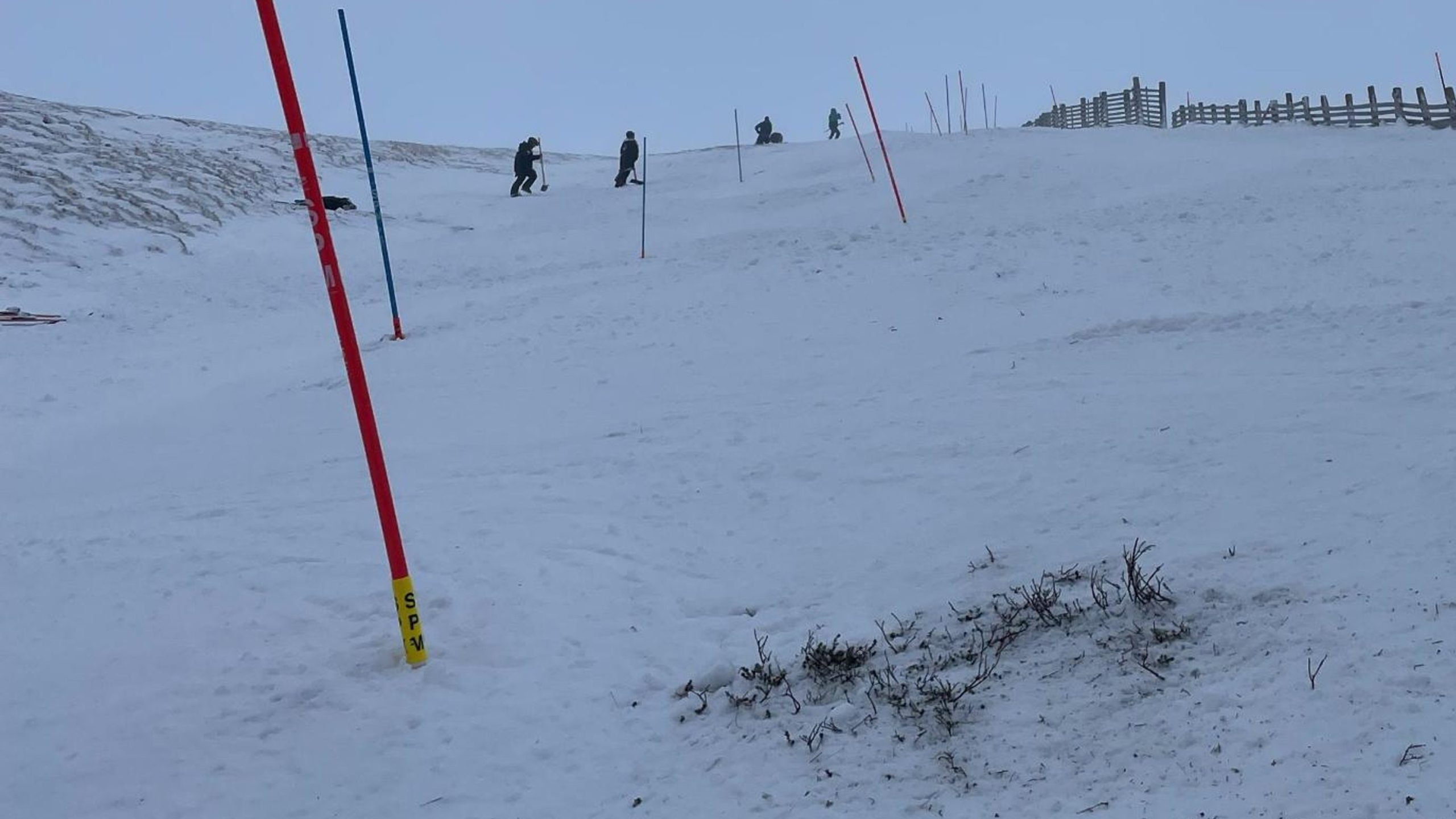
The implementations of LTAD in alpine skiing are, for obvious reasons, based on having access to snow. It’s no secret that Scottish winters are becoming less predictable, with fickle ski seasons meaning we have less reliable access to snow training at home. It’s for this reason that dry slopes and snow domes exist (though the latter is a bit of a sore spot for us Scots at the moment following the closure of our only indoor slope). This is also why so much of British ski racing revolves around overseas training camps and race opportunities. Both of these sides of the sport have grown a lot in recent years, and it’s now even possible to race every weekend outside of winter on the ‘BARTS circuit’.
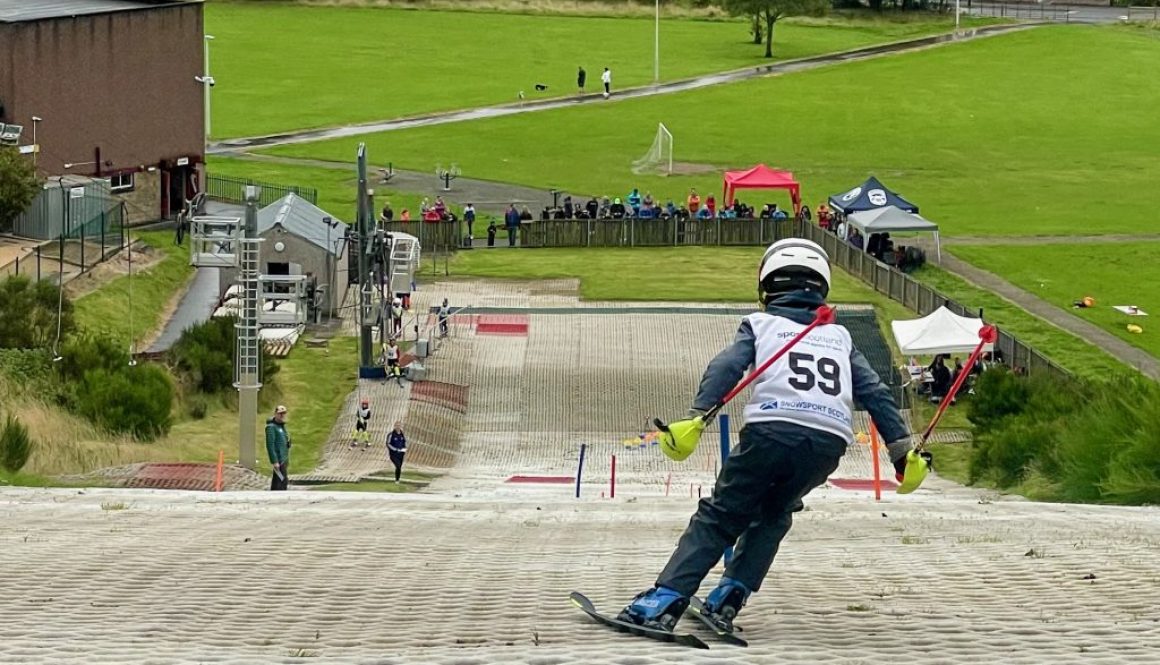
I suppose then, particularly off the back of so many poor ski seasons at home, it’s easy to see why so many people are racing so much on dry slope and indoors throughout the summer. However it’s not entirely clear where this fits into the LTAD model. Perhaps it is resulting in lots of young racers doing too much intense competition too early on, increasing the risk of burning out and losing the love for the sport. Don’t get me wrong, dry slope skiing has its place, including BARTS races, but it can be easy to fall into the ‘trap’ of doing too much, particularly when there are so many opportunities that don’t require travelling abroad. That said, several ‘away’ race weekends, factoring in travel and accommodation costs for a family, can easily approach the price of a residential week on a European ski camp, and the latter has the potential to be far more beneficial.
“My son will never ski in the World Cup. Why, then, do I spend so much time and money on ski camps? “This type of sport is a way for him to develop both physically and mentally during the important years. He has become totally dedicated to something. He has developed pride, self confidence, mental awareness, lasting friendships, punctuality and pride in his appearance. “Short of the military, he has become regimented in his actions both at home, school and on the mountain. He doesn’t like to lose but has become more gracious about it. He certainly doesn’t have time to be bored. He has learned to take criticism and accept praise gracefully. “All these qualities take some people a life to attain. My son is 12 years old.”
SSC Racing will continue to train on Scottish snow, whenever and wherever possible. Our programme of alpine camps continues to grow and be some of the best value for Scottish racers. All our training is closely aligned with the LTAD model for snowsports. You can find details on upcoming opportunities here.
Being the parent of a young ski racer is a unique (and often very cold!) experience – standing on the side of a hill, watching from behind the netting, and willing your child to have their best run ever.
But whether it’s your first winter of racing or your fifth, it’s important to understand how you can best support your child: not just with warm gloves and hot chocolate, but with the right mindset and behaviour in training and on race days.
This article offers a few key reminders and tips to help you be a positive, respectful, and encouraging presence for your young athlete—and everyone else on the hill.
❄️ On the Slopes: Training & Spectating Safely
It’s great that parents want to watch and support their children while they train or race, but safety, space, and respect for the coaching environment must always come first.
Here’s what we ask of you when you’re on skis near training lanes or watching from the side:
✅ DO:
Keep a respectful distance when training is taking place – it’s tempting to ski nearby or “follow along,” but it can distract athletes and disrupt the flow of the session.
Observe from designated areas (if available), or stay well clear of the course and training lanes (for everyone’s safety).
Support all athletes, not just your own – SSC promotes team spirit, and it helps when spectators do too.
Ask your child about their training after the session, not while it’s ongoing.
❌ DON’T:
Ski into, through, or right beside training courses, even on quieter slopes (this is a serious safety risk) unless you are asked to help. Coaches will often appreciate a hand carrying gates or slipping rutty courses.
Shout instructions, encouragement, or critique during a run – your child is likely trying to focus on feedback from their coach.
Coach from the side – even well-meaning tips can confuse and undermine the coaching process.
Coaches are working hard to create a focused, enjoyable learning environment. If your child hears one message from their coach and a conflicting one from a parent, it leads to uncertainty and mixed messages—especially for younger racers.
Let us do the coaching – your job is the cheering and encouragement!
Even off the hill, particularly on residential camps, children thrive when they are with their peers and coaches. The more you are able to leave them to it, the more they will get out of the experience – growing to become independent, respectful teammates.
🎿 On Race Day: Be Their Calm, Not Their Coach
Race day can be nerve-racking for everyone, but especially for children. It’s when all the hard work, travel, and anticipation comes together, and emotions can run high. Remember, though, it is supposed to be fun, especially at the younger ages! Here’s how you can help them perform their best and enjoy the experience:
Food & Rest
It’s important that racers are well fed and energetic coming into a race. Not only is a good breakfast consisting of slow-release energy (carbohydrates) important, but so is dinner the night before, as this is what is really in their system at 9am the next day! A breakfast meal heavy on protein and fat requires the stomach to use a lot of oxygen, oxygen that their muscles need. Athletes need complex carbs – protein and fat replacement is not sufficient for fuelling muscles for endurance athletes. Ski racing is an endurance sport, not because the combined race runs are 1.5 minutes but rather because the athletes are out all day working and skiing, and they have to have enough energy to do that AND put two solid runs together without being tired or fatigued. Ideal breakfasts are pancakes, waffles, cereal, bagel, apples, etc. If you’re in a rush, cereal bars, bagels, bananas, apples, oranges, peanut butter & jam sandwiches can help – these are good to have in a pocket anyway for snacking during the day. Ski resort food is rarely healthy. If you can, try to steer your child to a healthy lunch as well, though we know they can sometimes be picky eaters!
Sleep is incredibly important. That’s why the house parent will usually ask for phones to be handed in on camps – so that trainees get a full night’s sleep, distraction-free. And it’s not just the night before a race that’s important, it’s several nights in the run-up!
Turning up right
If it’s not dark when you’re getting ready to head to a race, you’re probably running late! Ski racing involves a lot of “hurrying up and waiting”, but there’s no second chance if you’re late. Make sure you arrive in plenty of time to collect bibs, get skis on and warm up if possible, be ready for the start of course inspection, and then prepare for your run.
Keep it calm and positive, and use the right language
Stick to familiar routines: breakfast, boot up, and warm-up as they’ve practised.
Remind them: “Try your best, have fun, and listen to your coach.” That’s enough.
Avoid saying things like “Go fast!” or “You need to win today.” These add pressure they don’t need.
If they fall, straddle, or DNF: “That happens. What did you learn?” Remember, often more is learned from failure than success!
If they have a great run: “That was fun to watch. You looked confident out there.”
Try to avoid discussing times, rankings, or comparisons – focus instead on their effort, attitude, and learning.
Of course, celebrate their success when it comes! Generally, though, celebrate the effort over the outcome.
Let coaches do their job, but don’t be afraid to ask if they could use a hand.
Show up and cheer loud (respectfully)!
Remember the Bigger Picture
Not every race will go well. That’s not just OK, that’s necessary.
The best ski racers in the world have long seasons with tough days. Your child’s ski journey is a marathon, not a sprint.
Support them through ups and downs. They’ll remember how they felt far more than what place they came.
Being a great race parent doesn’t mean being perfect, it means showing up, staying calm, and trusting the process.
At SSC and across British ski racing, coaches, race organisers, committees, and volunteers are working hard to foster confident, resilient young people who enjoy the sport for life. With your help, we can make every training session and race day a positive, meaningful step on that journey.
If you ever have questions about what to expect on race day, how to help your child manage nerves, or how to interpret their results, just ask your coach. We’re all on the same team.
We have a lot of camps, and if you’re thinking about your first camp or few, it can be hard to know which ones are best for your child. It is a big investment, after all!
Why it matters
Attending alpine camps comes at a significant cost, so it’s important to make the right choices.
Training volume is about more than just time on snow – it’s about the right type of training, at the right time, for the right athlete.
Too little training can slow skill progression; too much can lead to fatigue, injury, or burnout.
We follow a “quality over quantity” approach – prioritising focused, varied sessions and sustainable progress.
Find out more about why getting training volume right is so important in our previous article.
How many camps should an athlete attend?
The key principle is to get the volume right. Beyond that, it doesn’t hugely matter exactly which camps you attend, so long as it is an appropriate amount of training and racing. For most racers, unless they are a U10, a single one-week camp each season is not going to be enough for them to really develop. Two to three camps is where most racers will thrive, and then it comes down to affordability, both in terms of cost, and in any time taken off of school. In short: do what you can, when you can!
🟢 U10–U12 (FUNdamentals / early Learn to Train)
Recommended: 1–2 camps/year ✅ Best options: camps with a mix of training and free-skiing opportunities, with some races.
New Year: no/minimal time off school required, exploring lots of different ski areas, with dedicated free ski afternoons
February half-term: again, minimal time off school required, with potential race opportunities, typically good weather, and plenty of time outside the gates
🔁 Keep variety with plenty of Scottish skiing in a good winter, and lots of other sports ❌ Avoid indoor camps, as there is little free-skiing, and the icy surface can be brutal!
🔵 U12–U14 (Late Learn to Train / early Train to Train)
Recommended: 2–3 camps/year ✅ Best options: camps with lots of training time, and more race opportunities
October: ideal for developing technique & confidence – lots of time & miles on skis
Indoor Camps: solid, intense technical + tactical training blocks
New Year: first seeded race exposure but still plenty of free-skiing & fun to be had
February/Easter: lots of training time and a god stepping stone toward full competition
🔁 Complement with lots of Scottish skiing and general sports activity 💰 Bursary support often available at this level
🔴 U14–U16 (Train to Train)
Recommended: 3–4 camps/year ✅ Best options: camps with more focussed training time, and seeded BASS races
October: key performance development
Indoor Camps: short, intense bursts to keep the skiing fresh between other camps
New Year: lots of miles on skis & early-season race opportunities
February: solid training block followed by several British races to stack up against a national level
Summer Camps: now there’s more of a focus on snow ski training in the off-season
📈 Volume starts to build here—still with balance and fun 🧠 Include off-snow fitness and sport psychology development
⚫ U16+ (Train to Compete)
Recommended: 4+ camps/year + focussed off-snow ski training
✅ Best options: all camps are relevant – maximise volume depending on race calendar, school exams, costs, etc.
💭 Emphasis on tactical refinement, competition strategy, self-management 🏋️♀️ S&C, equipment testing & tweaking, lots of video analysis, and sport phsychology all become essential
Ski racing is a thrilling, high-intensity sport that challenges athletes physically, mentally, and emotionally. For many young athletes, it becomes a central part of life – training on snowy slopes, pushing limits in gates, travelling to races, and dreaming of future success. And we think skiing (not just racing) is for life – see our previous post about how we foster that. But with all that excitement comes a risk that can derail even the most promising young skiers: burnout.
What is burnout?
Burnout is a state of physical, mental, and/or emotional exhaustion caused by prolonged or excessive stress, often combined with intense pressure to perform. In young athletes, it can show up as:
A gradual or sudden drop in motivation or enjoyment
Ongoing fatigue or trouble recovering
Increased injury or illness
Anxiety or stress around competition
Losing interest in skiing or ski racing
Burnout doesn’t happen overnight. It builds slowly when training and competition become unbalanced – when the joy of skiing is replaced by constant pressure, repetition, or unrealistic expectations.
Why are young ski racers at risk?
Ski racing can be demanding: early mornings, cold conditions, technical challenges, and high competition standards. Add to that the external pressures (podiums, rankings, comparisons on social media or between peers/parents), and it’s easy to see how a young skier can lose their spark.
A common contributor is early specialisation – focusing too narrowly on ski racing at a young age, without time for other sports, activities, or simply unstructured fun. Too much time in gates, too soon, can lead to physical strain and mental fatigue.
Another common factor is an expectation of progress to be linear. I’m sure everyone has seen the chart of what progress really looks like in one context or another, and it couldn’t be truer than in ski racing. In fact, throughout the highs and the lows of sport, the lows are often even more important in the development of an athlete, not just in their sport, but as a person.
How we help prevent burnout
At Scottish Ski Club, our approach is guided by the UK’s Long-Term Athlete Development (LTAD) model—a framework that ensures young athletes are developing at the right pace, with the right amount of challenge for their age and stage.
Here’s how we put that into practice:
1. Age-appropriate training volume
One of the biggest factors in burnout is too much training, too soon. That’s why we scale the volume of training to match each LTAD stage. The numbers below are general guidelines based on international best practice*, but they are not targets—they’re flexible and should be adapted for each child based on their needs, interest, and overall wellbeing.
FUNdamentals (ages 5–9): ~10–20 days per season, so 1-2 camps, with plenty of Scottish skiing in a good season. This stage is about exploration and enjoyment – skiing should feel like play, not pressure.
Learn to Train (ages 8–12): ~20–35 days per season, around 2-3 camps with as much Scottish snow training as possible in between. Athletes begin to develop core skiing skills and race basics, but free-skiing and varied experiences remain key.
Train to Train (ages 11–16): ~35–60 days per season, around 3-4 camps with Scottish training to complement. Training becomes more structured, but variety, off-snow conditioning, and maintaining balance are still crucial.
Train to Compete (15+): ~60–90+ days per season: maximise value from camps with a view to progressing towards the national teams. Athletes focus more seriously on performance, but rest and recovery are still essential.
These numbers should not be viewed as rigid or prescriptive. Every child is different, and a well-rounded athlete might do fewer days and still develop exceptionally well. As snowfall in Scotland has become more fickle and unreliable in recent years, so many domestic on-snow training days are less possible. Alpine camps become an essential stop-gap, with our Bursary scheme in place to help fund this. This is also why we place added importance on making every session count, and supporting skill development through dryland training, and dryslope/indoors where appropriate. What matters most is quality over quantity, and maintaining a love for skiing – not chasing arbitrary training day counts.
*These guidelines are based on sport science & research which has percolated through the UK and Canadian LTAD models, as well as more generic advice from sportScotland, and our own coaching expertise.
2. Balancing gate training with skill development
Too much time in gates – especially at younger ages – can cause both physical strain and mental fatigue. It also limits the development of core skiing skills.
We aim for around 50-60% of on-snow time in gates, even up to around the Train to Train stage. The rest of the time is spent free-skiing, doing drills, exploring terrain, and skiing as a team. Not only is this more fun, it also builds better technical and tactical skiers in the long run.
3. Encouraging rest and other sports
We encourage athletes, especially those aged 15 and under, to participate in other sports throughout the year. Football, gymnastics, biking, swimming, and athletics all contribute to physical literacy and help avoid overuse injuries.
Crucially, these breaks give athletes time to miss skiing; to come back to it refreshed and excited, rather than worn out.
4. Building a positive team environment
Burnout isn’t just physical, it’s emotional. We know that athletes are more likely to stick with a sport if they feel part of a team, supported by peers and coaches alike.
At SSC, we foster a team culture that’s inclusive, encouraging, and focused on effort over outcome. That sense of belonging is one of the strongest antidotes to stress and pressure.
5. Teaching resilience and mindset skills
We include off-snow sessions that cover elements of sport psychology like goal setting, handling nerves, visualisation, and dealing with setbacks. These give athletes tools they can use not just in racing, but in life.
We also encourage reflection and ownership of their learning. When young athletes understand why they’re doing something, not just what they’re doing, they become more engaged, more confident, and more resilient. The phrase “trust the process” can be a bit cliché, but knowing that the low points are part of the journey to success is key to sticking with it.
6. Keeping fun at the centre
Ski racing is hard work, but it should still be fun. Powder runs, games, races in fancy dress, and skiing with friends – these are the moments that keep the passion alive. We don’t see these as distractions from “serious” training. We see them as essential.
What parents can do
Parents play a vital role in preventing burnout. You can help by:
Supporting rest and variety – don’t worry if your child wants a break, or plays other sports
Focusing on effort, enjoyment, and learning – not just results
Trusting the process – it’s a long road, and every athlete develops at their own pace
Encouraging open conversations -if your child feels stressed or tired, it’s okay to step back and reset
Skiing on dryslope/indoors
So where do the UK dryslope/indoor training programs and race ‘circuits’ fit in to this? Well, it’s not entirely clear. For most alpine nations (the ones with direct access to reliable snow at home) summer is mostly time taken off of ski racing. Lots of top ski racers enjoy hiking, watersports, mountain biking, golf – other physical outdoor sports – but then they are skiing so much more in the winter because access to the snow is easier for them. Is there even a need to ski on a dryslope? Some coaches think not, but we can definitely see some of the benefits. Here are some arguments for and against it:
1. Technique and tactics
It’s no secret that skiing on a dryslope feels different to skiing on snow. Skiers often develop compensatory habits (e.g. forced edge angles, exaggerated upper-body movement) that may not transfer well – or may even hinder progress – on real snow. However, dryslopes and UK snowdomes provide a cheaper and more local way of developing some limited technical fundamentals that cross directly over to snow. And given the thriving artificual race circuit in the UK, there are plenty of opportunities to develop race tactics & psychology!
2. Time and Energy Trade-Off
Time spent on dryslope might be better used on: cross-training (e.g. other summer sports), mental skills training, recovery& fitness training, or summer snow training camps* (see point on cost below!) Having said that, local artificial slopes provide year-round access to
3. Psychology
Some young racers find dryslope less enjoyable or motivating due to repetitiveness, or a less ‘authentic’ feeling compared to snow. For athletes already training hard, adding dryslope to their program can contribute to burnout – especially if it feels like “extra” rather than purposeful. Conversely, if newer racers have not had a lot of exposure to a training or race environment, a dry or indoor slope might be enough to keep the enthusiasm up in between access to snow.
4. Cost
Whilst training at your local dryslope can be a very affordable way to get time on skis, touring the UK to maximise BARTS race opportunities as a family can become very expensive. *It’s worth considering whether there is more value in fewer summer dryslope/indoor ‘away’ races to save up for a week or two residentially abroad on snow. 1-2 weeks of alpine camps fits better into the LTAD model for a mini/U14 than 4-6 weekends of summer races!
In short, there’s no clear cut answer; it depends on age, goals, developmental stage, and ease of access to snow. Younger or less experienced skiers can benefit from dryslope if used carefully, with good coaching and no pressure to “specialise” in it. More experienced racers who already get regular snow training may gain more from focusing on snow-specific skills and physical preparation. Use dryslope strategically, not just habitually. For example, short technical blocks or race practice in pre-season may be useful for any level of racer.
Final thoughts
Burnout is preventable, but only if we take it seriously. That doesn’t mean avoiding hard work. It means making sure the training matches the athlete’s age, stage, and individual needs. It means focusing on the process and not expecting linear progress. And above all, it means keeping the joy of skiing alive.
If you ever want to chat about training volume, athlete development, or how your child is doing, SSC coaches are here to support you. Together, we can make sure young ski racers keep loving the sport for years to come.
Scottish Ski Club race training has a clear objective for its trainees – to become better ski racers. Believe it or not, that isn’t just about training gates, marginal gains, and chasing podiums. We aim to develop well-rounded, resilient skiers who love the sport for life. Everyone has the high potential to be good at lots of different things, and it’s our job as ski coaches to help them reach their peak skiing potential.
This article refers to “athletes” a lot. You might think that this isn’t relevant to your child – especially if they have only just started ski racing, or are taking part in grassroots-level activity – but it does! The Oxford dictionary defines an athlete as “a person who competes in sports”, so even if your child is preparing for their very first race, they are an athlete.
What we do
Ski racing is a late specialisation sport. In short, this means an athlete is likely to reach their full potential by participating in a variety of sports at a young age, rather than focussing solely on skiing. Our training aligns with the UK’s Long-Term Athlete Development (LTAD) model, which is developed and supported by the home nations, including Snowsport Scotland and GB Snowsport. This internationally recognised framework helps coaches to shape training programs that support young athletes over the long term, maximising both performance and enjoyment.
The LTAD Stages in Ski Racing:
FUNdamentals (ages 5-9): Focus on fun, movement skills, and basic skiing ability. It’s about variety – not early specialisation.
Learn to Train (ages 8-12): Introduction to race technique and strategy, but still with a strong emphasis on all-mountain skiing and multiple sports.
Train to Train (ages 11-16): Greater focus on structured training, physical conditioning, and ski-specific skills. Racing becomes more regular, but skill development remains the priority.
Train to Compete (ages 15+): Athletes now specialise more fully in ski racing, with tailored strength and conditioning, performance psychology, and competition strategy.
Train to Win / Active for Life: At the highest levels, the focus is on peak performance. But crucially, the LTAD also supports lifelong participation—whether in coaching, recreational skiing, or sport leadership.
Technical background
Coaches use the acronym TTPPEE (“tee-pee”) to develop skiers. These are the six areas where improvements can be made. The importance of each area will shift over time and between individuals, but each area is essential to developing a successful, well-rounded ski racer.
Technical
Skiing technique, skills and drills, and understanding the process
Tactical
Decision-making, reading terrain and line, adapting to conditions
Physiological
Agility, balance, coordination, fitness, and strength
Psychological
Positive attitude, mental preparedness, resilience, and teamwork
Equipment
Tuning, maintenance, understanding rules and appropriate what is appropriate kit
Environment
Adaptability and resilience in all conditions, creating a positive team atmosphere
How we do it
Our training is not just about getting results as quickly as possible. That might sound counterintuitive – of course we want to maximise every athlete’s potential – but there’s so much more to ski racing. The sport naturally builds respectful, independent, organised, and resilient individuals by virtue of its intense training and competition environment. Children gain so much through race training even on Scottish hills, and that is amplified on a residential overseas camp. Our coaches encourage SSC trainees and their families to recognise that.
Many children’s and minis teams spend a significant amount of time training in gates. This is partly because it’s relatively easy to set up a slalom or GS course-based training environment, and it looks great – after all, that’s what World Cup teams do! There are also external pressures, such as expectations around immediate performance improvements in upcoming races.
However, that doesn’t necessarily fit within the LTAD model—especially before the Train to Train stage (typically U14+). Even then, skiing gates shouldn’t overly dominate on-snow time. We believe around 50–60% of total ski time spent in gates is a good maximum (not a target!). More than that, and training can become repetitive and even counterproductive. It’s not uncommon for racers to get so bogged down in skiing gates that they no longer enjoy simply skiing around the mountain, but that is the whole point!
Skill Development
It’s very difficult to make technical changes while skiing through a course. Gates are best used to develop tactical skills, whereas technical improvements happen most effectively outside of courses.
That’s why we put a big emphasis on free-skiing at SSC, whether it’s technical drills or simply blasting around the mountain in a train. Even group skiing without explicit instruction is hugely beneficial for younger skiers, particularly in the FUNdamentals stage. And yes, we’ll sometimes ditch the training lane altogether to go ski powder – because that’s what skiing is all about!
Fun & Team Spirit
We strive to make every SSC training session as fun and rewarding as possible. Race training and competition can be physically and mentally demanding, which is why a positive team environment is essential. Supportive teammates, lasting friendships, and a shared love of the sport are all key parts of what we do. We expect every SSC trainee to be a good sport, a respectful individual, and a team player.
Mindset & Resilience
The club actively nurtures a positive mindset and strong engagement in the coaching process. That means encouraging a love of learning, fostering determination, and building the grit needed to overcome challenges – not just in sport, but in life. These qualities are reinforced both on and off the hill, including through theory sessions, mental skills discussions, and reflection activities.
Physical Literacy
Developing agility, balance, and coordination (ABCs) is essential for success in a complex sport like skiing. These skills are supported through age-appropriate dryland training, as well as dynamic on-snow activities. Strength and fitness also improve naturally through time on skis, especially at altitude or during intensive camps.
Tactical Awareness
Versatile skiing and the ability to read terrain are not just relevant for racing—they’re critical for all-mountain skiing too. Whether inside or outside the gates, we teach athletes how to adapt and anticipate, helping them become confident, adaptable skiers in all conditions, who will get the most out of any day, even a bad weather one!
Why LTAD matters
Too much, too soon can lead to physical injuries, mental exhaustion, and even a complete loss of interest in skiing. That’s why LTAD isn’t just about improving performance – it’s about protecting young athletes.
By focusing on age-appropriate goals, we ensure:
Progression without pressure.
Balanced development across physical, mental, and social domains.
Athletes stay engaged and excited about skiing.
Time for other sports, helping avoid overuse injuries and building all-round athleticism.
This approach doesn’t mean we hold racers back – it means we prepare them better for long-term success. Some of the world’s best racers, like Mikaela Shiffrin and Dave Ryding, were multi-sport athletes who followed a progressive path (albeit in quite different ways!) and not one of early specialisation and overtraining.
Our Commitment
At Scottish Ski Club, we are committed to delivering high-quality race training that reflects the best of coaching science, our love for skiing, and the unique camaraderie of our sport. We believe in developing racers who are not just competitors – but confident people, and passionate skiers for life.
Whether your child dreams of medals or mountain adventures, we’re here to help them enjoy the ride and reach their potential, at their own pace.
Seeding systems are a way of tracking and comparing race performances. In the UK we have our own national seeding system, but it is based on the same calculations applied internationally by FIS, the international snowsport governing body.
How do they work?
Every ‘registered’ racer starts their career with 999.99 ‘list’ points in each discipline (SL, GS, etc.). The underlying principle is that the fastest skier in the system has 0 list points: they are the ‘zero point racer’. Your list points are either your best point score, plus 10%, or the average of your best two scores. Seed lists are published periodically throughout the season, and your list points only change each time a list is published, based on points scored at races considered for that list. All the British seed list publication dates are available on GBSki annually, along with more information.
In the British system, there are three different lists:
BASS (British Alpine Seeding System), for snow races
BARTS (British ARTificial Seeding system), which has two separate lists:
iBARTS, for indoor races
oBARTS, for outdoor (dryslope) races
The lists are separate, and points are not comparable between lists/systems, because the surfaces really are quite different.
At FIS level, there is one list published periodically throughout the year.
How do I score points?
Fundamentally, a point score from a race is based on two things: how good the field of racers you competed against was, and how you did relative to the winner. If you win the race, but the field didn’t have particularly low points, you would probably score similarly to a race where you were quite far ‘off the pace’ (i.e. slower than the winner), but the field was very strong. The calculation works like this:
The specific ‘F’ value for the discipline is divided by the winner’s time. This gives you ‘points per second’. You then multiply this by the how far behind the winner you were. These values are fixed for each season (and only ever change once every few seasons at most).
A ‘penalty’ is calculated based on the list points of the best racers on the start list. For certain races, there is a minimum penalty above 0 (for various reasons). This penalty is added to your points to give you your point score from this race.
Minis races are not seeded, so minis cannot score points. There’s no need, since minis racing is all about fun! At U14 level, each individual race run is seeded separately – that’s why U14s always get to ski both runs. At U16 level and older, races are seeded based on combined times, so a DNF in either run means no result.
Are points important?
Yes and no. They are a useful comparison tool, a way of comparing your own performance against your own past performances, or of comparing one racer to another without them necessarily having competed in the same races all the time. However, it can be easy to get carried away! Some racers can become a bit obsessed over their points, which can add yet another element of pressure to the sport and ironically hinder performance.
Points are used to select racers to the national teams, though, so it’s understandable why some might fret about them. The governing bodies typically set points criteria for each year group which, if you meet, should grant you automatic selection to the team. It’s worth noting that neither the Scottish or British teams select based on BARTS points, since the teams are selected for training and competition on snow only.
Want to know more?
The British rules on seeded are defined in BCR Book III for snow, and BACR Book III for indoor/dryslope.
On 23rd November 2024, The Scottish Ski Club is organising our Winter Snow Ball at the Dunblane Hydro in aid of the Club’s Bursary program, which helps to fund our members in our race training program on our Alpine camps. Click here find out more about the Bursary program.
It will be a great night with a drinks reception, three course meal with some wine on the table, raffle prizes and a ceilidh/disco. Tickets cost £85 each. The Ball will raise money for SSC Bursaries for young racers and also gives us an opportunity to celebrate Scottish skiing and ski racing with friends old and new.